
How to Assess Pet Product Quality Table of Contents
- Why Assessing Pet Product Quality Matters
- Understanding Pet Product Safety Standards
- Step 1: Check the Ingredient List and Guaranteed Analysis
- Step 2: Verify Manufacturing Standards and Quality Assurance
- Step 3: Evaluate Ingredient Sourcing and Supply Chain Transparency
- Step 4: Assess Safety Testing and Contamination ProtocolsWhat Manufacturers Should Be Testing ForHow to Find Evidence of TestingRed Flags in Safety TestingConsumer-Level Spot Checks You Can Do at Home
- How to Choose Safe Dog Toys and Best Durable Dog Beds for ChewersMaterial Safety Standards for Pet Toys and AccessoriesEvaluating Toy Durability and Construction QualityWhat to Look for in Durable Dog BedsRed Flags in Non-Food Product QualityOngoing Inspection and Replacement
- Step 5: Look for Product Consistency and Lot-to-Lot Variation
- Making Smarter Choices Moving Forward
- Frequently Asked Questions
Last Updated: September 23, 2026
Why Assessing Pet Product Quality Matters
The quality of pet products you choose directly affects your pet's health, safety, and happiness. A low-quality product might fall apart after a week, get recalled due to contamination, or cause harm.
Product labels can be confusing, manufacturing claims aren't always transparent, and safety standards vary widely. This guide provides a practical approach to assess pet product quality so you can confidently choose what's best for your cat or dog.
Understanding Pet Product Safety Standards
Pet food must comply with FDA standards, while toys and accessories have fewer mandatory requirements. Understanding these frameworks helps you know what to look for when evaluating products.
The FDA requires manufacturers to use safe ingredients and maintain clean facilities, but doesn't pre-approve formulations (the FDA). You can't assume every product on the shelf has been vetted by regulators.
Toys and accessories have no single federal requirement. Look for products from manufacturers who voluntarily test for hazards like sharp edges, loose parts, or toxic materials.
Step 1: Check the Ingredient List and Guaranteed Analysis
For pet food and treats, the ingredient list and guaranteed analysis tell you what's in the product. Ingredients are listed by weight in descending order, so the first few items make up the bulk of what your pet eats.
Look for named meat sources like "chicken" or "beef" rather than vague terms like "meat meal." Avoid excessive fillers, artificial colors, or preservatives.
The guaranteed analysis shows protein, fat, fiber, and moisture levels. Compare these to your pet's age, size, and activity level.
For non-food products like toys or beds, look for material descriptions. Quality beds should specify the filling type and cover material. Toys should list all materials used. If a product label is vague about what it contains, that's a red flag.
Step 2: Verify Manufacturing Standards and Quality Assurance
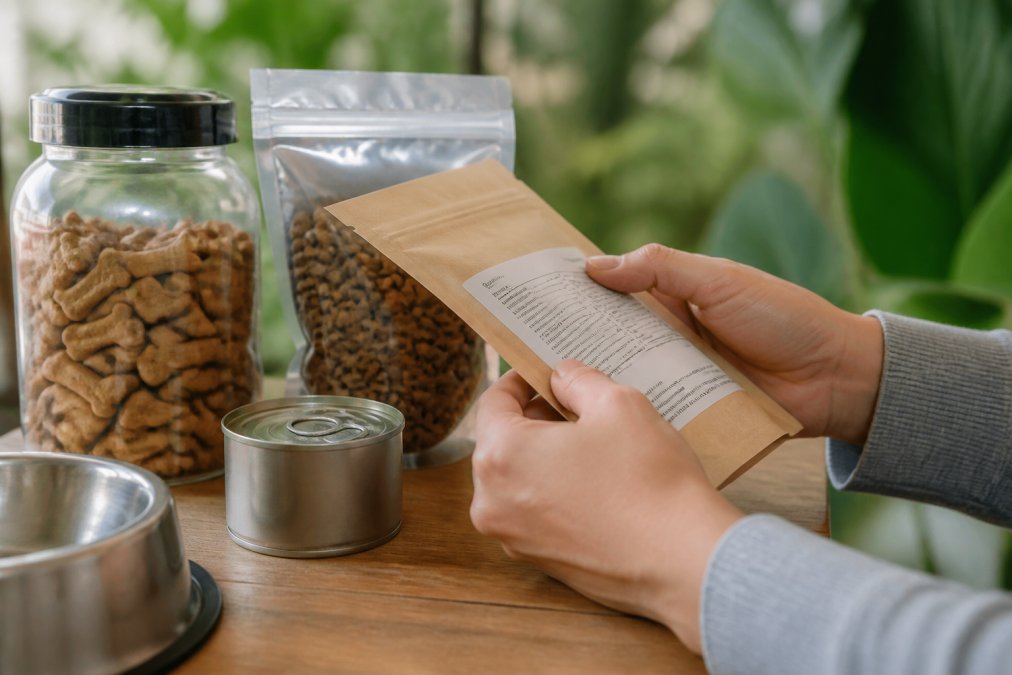
Look for products from companies that mention testing for contaminants, consistency, or safety.
Step 3: Evaluate Ingredient Sourcing and Supply Chain Transparency
Products sourced from reputable, traceable suppliers are less likely to contain contaminants. Some manufacturers publish supply chain details; others don't.
Step 4: Assess Safety Testing and Contamination Protocols
Learn what evidence to look for and what red flags suggest inadequate testing.
What Manufacturers Should Be Testing For
Reputable pet food manufacturers test for:
- Bacterial contamination (E. coli, Salmonella, Listeria)
- Mycotoxins (aflatoxins from moldy grains)
- Heavy metals (lead, cadmium, mercury)
- Pesticide residues
- Nutritional consistency (verifying claimed protein, fat, and fiber levels)
For toys and accessories, quality manufacturers test for:
- Material toxicity (ensuring paints, dyes, and rubbers don't leach harmful chemicals)
- Durability under stress (tensile strength, tear resistance)
- Choking hazard risk (small-part detachment)
- Seam integrity (resistance to unraveling)
How to Find Evidence of Testing
Third-party certifications are the strongest indicator. Ask the manufacturer directly if the product has been tested by a third party and request documentation.
Red Flags in Safety Testing
- Vague claims like "tested for safety" without specifics about what was tested or by whom
- No response when you contact the manufacturer with questions about testing
- Absence of lot numbers on packaging (makes tracing contamination impossible)
- Multiple recalls in a short timeframe, especially if the company didn't communicate proactively
- Imported products with no documentation of testing in the country of origin or upon import
Consumer-Level Spot Checks You Can Do at Home
For food products:
- Smell test: Off-odors (sour, musty, rancid) suggest spoilage or mold.
- Visual inspection: Look for discoloration, clumping, or visible mold. Moisture indicates storage problems.
- Texture consistency: If a product suddenly feels different, it may indicate a formulation change.
For toys and accessories:
- Seam inspection: Loose threads, gaps, or uneven stitching suggest poor construction.
- Material flexibility test: Quality materials return to shape; cheap plastics crack or stay bent.
- Smell test: Strong chemical odors indicate off-gassing from low-quality materials.
- Small-parts check: If buttons, bells, or decorative elements come loose easily, they're choking hazards.
How to Choose Safe Dog Toys and Best Durable Dog Beds for Chewers
Non-food pet products face fewer regulatory requirements than food, so quality assessment falls on the consumer. A failed toy can cause choking or injury, and a poor-quality bed can fail to support aging joints.
Material Safety Standards for Pet Toys and Accessories
Look for toys made from natural rubber, untreated cotton or hemp rope, food-grade nylon, or non-toxic rubber compounds. Avoid PVC, vinyl, low-grade plastic, painted materials without non-toxic documentation, and foam that sheds.
Evaluating Toy Durability and Construction Quality
Seam and stitching quality is the first failure point. Seams should be double-stitched or reinforced, tight and even, and on the interior where possible. Look for bar-tack reinforcement at stress points.
What to Look for in Durable Dog Beds
Quality beds resist predictable failures through material choice and construction.
Cover material durability is critical for dogs that chew or dig. The best covers for aggressive chewers are made from:
- Ballistic nylon (military-grade, tear-resistant)
- Canvas (heavy-duty, tightly woven)
- Microsuede (durable, less likely to snag claws)
Seam construction determines how long a bed lasts. Quality beds have:
- Double-stitched or triple-stitched seams throughout
- Reinforced corners (the highest-stress areas)
- Bar-tack reinforcement where the cover attaches to the base
- Seams that are straight and even, not skipped or loose
Removable, washable covers extend bed life by protecting the foam core and making cleaning easier. Quality covers should:
- Be machine-washable without losing durability
- Have a secure zipper or closure that doesn't jam
- Fit snugly so they don't shift during use
Red Flags in Non-Food Product Quality
- Vague material descriptions ("synthetic blend" instead of specific materials)
- No information about seam construction or reinforcement
- Toys with small, easily detachable parts (bells, buttons, squeakers)
- Strong chemical smells that don't fade after airing out
- Thin, flimsy seams visible to the naked eye
- Foam that compresses permanently when you press it
- No manufacturer contact information or unresponsive customer service
- Consistently poor reviews mentioning seams tearing, pieces coming loose, or rapid deterioration
Ongoing Inspection and Replacement
Even durable toys and beds wear out. Inspect them regularly:
- Weekly visual checks for loose threads, tears, or missing pieces
- Monthly seam inspections for separation or fraying
- Discard immediately any toy with loose parts, tears, or damage
- Replace beds when foam no longer provides support or seams begin to separate
A quality toy might last months; a cheap toy might fail in days. The investment in durable products pays off in fewer replacements and safer play.
Step 5: Look for Product Consistency and Lot-to-Lot Variation
Quality manufacturers maintain consistency from one production batch to another. This means a product made this month tastes, feels, and performs the same way as one made six months ago. Lot-to-lot variation is a sign of inconsistent manufacturing or quality control.
Making Smarter Choices Moving Forward
| Assessment Step | What to Check | Why It Matters |
|---|---|---|
| Ingredient List | Named sources, no vague terms | Tells you exactly what your pet is consuming |
| Manufacturing Standards | Facility certifications, third-party testing | Ensures products are made safely |
| Supply Chain | Transparency, country of origin | Reduces contamination risk |
| Safety Testing | Toxicology, durability, recall history | Protects your pet from hazards |
| Consistency | Batch-to-batch uniformity | Ensures reliable quality over time |
Learning to assess pet product quality takes time, but it's an investment in your pet's health and safety. Start by checking labels carefully, researching manufacturers, and reading customer reviews. Over time, you'll recognize quality signals and avoid products that cut corners.
Frequently Asked Questions
What safety certifications should I look for in pet products?
Look for products that comply with AAFCO (Association of American Feed Control Officials) standards for pet food, which set nutritional adequacy and ingredient safety requirements. For toys and accessories, verify that products have undergone physical durability testing and bacterial inspection. Check packaging for statements about quality assurance, contamination protocols, and third-party testing. Products with transparent manufacturing standards and supply chain transparency are more likely to meet safety requirements. Always verify that the manufacturer has documented safety testing procedures and recall history.
How can I tell if a pet product is low quality before buying?
Red flags include vague ingredient lists without specific protein sources, missing guaranteed analysis information, and no manufacturing date or lot number on packaging. Avoid products with excessive filler ingredients, unclear sourcing information, or no documented quality control measures. Check for a history of product recalls, poor customer reviews mentioning durability issues, and manufacturers that don't provide contact information or testing documentation. Products that lack regulatory compliance statements or don't specify safety standards are also warning signs of lower quality.
What materials should I avoid when choosing pet supplies?
Avoid products with loose or easily detachable small parts that pose choking hazards, especially for dogs. Steer clear of toys made with low-grade plastics that splinter easily or contain BPA. For dog beds, avoid materials that lack durability testing or use thin, easily torn fabrics that won't withstand chewing. Skip products with chemical odors or dyes that lack safety documentation. For food products, avoid those with artificial preservatives, by-products without clear sourcing, or ingredients that lack nutritional adequacy statements. Always choose products from manufacturers with documented physical durability and tensile strength testing.
How do I verify a pet product manufacturer's quality control standards?
Check the manufacturer's website for documentation of quality assurance procedures, contamination protocols, and third-party testing results. Look for statements about ingredient sourcing, manufacturing facility certifications, and lot-to-lot consistency testing. Contact the manufacturer directly to ask about their safety testing methods, recall procedures, and regulatory compliance documentation. Review customer feedback and product reviews for consistency issues or quality variations. Reputable manufacturers openly share their quality control processes, ingredient sourcing transparency, and testing certifications. Avoid brands that provide vague or evasive answers about their manufacturing standards or safety protocols.
Choosing the right pet products shouldn't require a degree in food science or materials engineering. By following these five steps, you'll make informed decisions that protect your pet's health and save money in the long run. Pet and Home Outlet makes this easier by sourcing products from manufacturers who prioritize safety testing, ingredient transparency, and consistent quality. Check out our selection of tested, high-quality pet supplies and find products that meet your pet's specific needs.