
Table of Contents
- Assess Your Pet Supplies and Declutter
- Best Storage Containers for Pet Food
- Pet Toy Storage Ideas for Every Space
- Create an Entryway Pet Supply Station
- Organizing Pet Medications and Health Records
- Vertical Storage and Wall-Mounted Solutions
- Pet-Proof Your Storage and Maintain Organization
- Conclusion
- Frequently Asked Questions
Last Updated: September 30, 2026
How to Organize Pet Supplies at Home
Keeping pet supplies organized saves time, money, and stress. When toys, food, medications, and grooming tools scatter across your home, you waste energy searching for what you need. A thoughtful system brings everything together in one place.
Organizing pet supplies at home doesn't require expensive systems or major renovations, just a clear plan.
Below are practical steps to organize pet supplies at home: declutter, choose containers, create zones, and maintain your system.
Assess Your Pet Supplies and Declutter
Pull every pet supply from closets, cabinets, and corners and lay them out so you can see the full picture.
Sort items into three piles: keep, donate, and discard. Be honest about what your pets use. Old toys nobody plays with take up space. Expired medications or supplements need to go. Half-empty bottles of shampoo you switched away from are clutter.
Ask yourself these questions about each item:
- Does my pet actually use this?
- Is it in good condition?
- Do I have duplicates I don't need?
- Is it expired or no longer relevant?
Decluttering first makes the rest easier and helps you determine exactly what storage space you need.
Best Storage Containers for Pet Food
Airtight containers with locking lids keep kibble fresh, prevent spills, and protect food from pests.
Look for containers that are:
- Airtight with secure latches
- Clear so you can see when food runs low
- Stackable if you have multiple pets
- Easy to clean and refill
Store pet food in a cool, dry place away from direct sunlight. Keep the original bag nearby for brand and feeding instructions.
For wet food, use the original can or transfer to a sealed glass container.
Pet Toy Storage Ideas for Every Space
Pet toys multiply fast and scatter without a system. Rotate toys every few weeks to keep pets engaged and reduce clutter.
Use these storage solutions based on your space:

For small spaces:
- Hanging organizer on the back of a closet door
- Under-bed storage bins
- Wall-mounted basket or bin
- Corner toy caddy
For larger homes:
- Toy chest or storage bench
- Open shelving unit
- Labeled bins on a shelf
- Dedicated toy corner with multiple bins
Create an Entryway Pet Supply Station
An entryway station keeps daily essentials within arm's reach for walks, training, and waste bags.
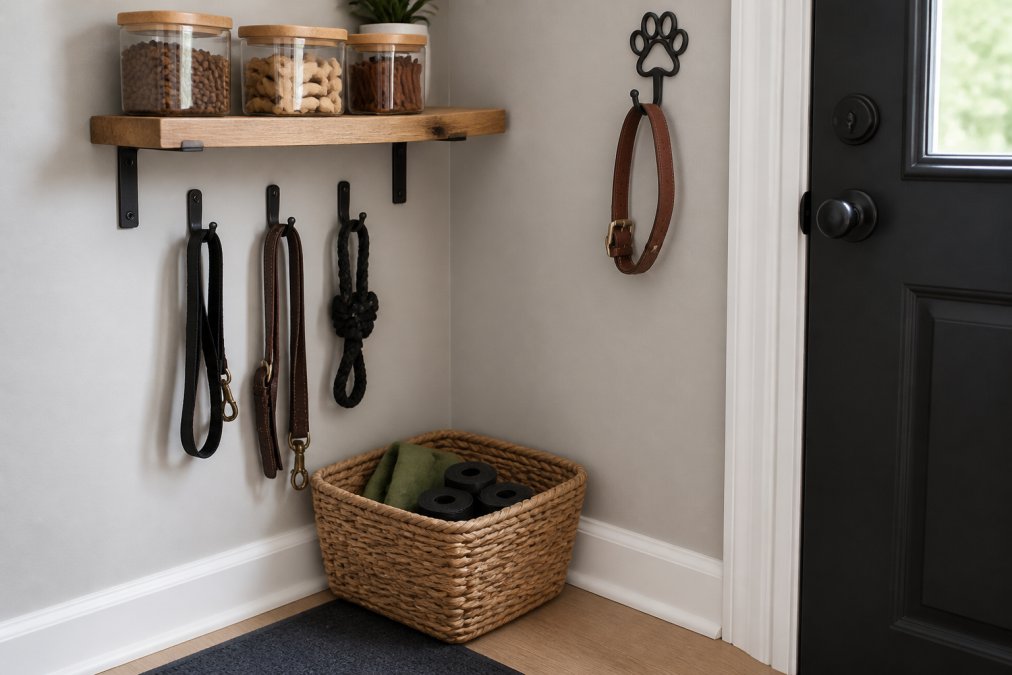
Set up your station with these items:
- Leash hooks on the wall at easy-to-reach height
- Treat jar or container for training rewards
- Waste bag dispenser for walks
- Small bin for collars, ID tags, or grooming wipes
- Shoe rack or basket for pet shoes or booties
Organizing Pet Medications and Health Records
Pet medications and health records need a dedicated, secure spot physically separated from general pet supplies, as many are toxic if ingested by another pet or child.
Creating a Safe Medication Storage Zone
Never store medications with treats, toys, or food. Instead:
HiMISS Adjustable 6-Level Metal Pantry →
- Use a locked cabinet or drawer in a bedroom, office, or bathroom where pets have limited access. A locking file cabinet or a cabinet with a childproof latch works well.
- Store medications on a high shelf (above eye level for standing dogs) in a cabinet with a door that closes fully.
- Keep a separate, clearly labeled bin for pet medications that is physically distinct from food and supply storage. Use bright labels or colored tape to mark it as "MEDICATIONS, DO NOT TOUCH."
- Store topical treatments (flea, tick, and heartworm preventatives) separately from oral medications. These are often highly concentrated and pose serious risks if ingested by another pet.
Organizing Within the Medication Zone
| Item | Storage Method | Safety Check |
|---|---|---|
| Daily oral medications | Small labeled bin with pet's name and photo | Check before each dose |
| Topical treatments (flea, tick, heartworm) | Sealed container, separate shelf | Store away from food prep areas |
| Supplements | Labeled bottles in a small box | Monthly expiration review |
| Emergency medications | Clearly labeled, easy access but still locked | Before each use |
| Prescription ointments or drops | Original container with label | Check expiration monthly |
Health Records and Emergency Information
- Vaccination records and dates
- Microchip information and registration number
- Allergy and medication lists (with dosages)
- Current medications and supplements
- Vet contact information and after-hours emergency clinic address
- Insurance details and policy numbers
- Recent photos of your pet (helpful for lost-pet situations)
- Blood type (if known) and any chronic conditions
Preventing Accidental Poisoning
- Flea and tick prevention products
- Heartworm prevention
- Dewormers and parasite treatments
- Prescription antibiotics or pain relievers
- Vitamins and supplements (some can be toxic in large amounts)
- Topical wound treatments or antiseptics
Vertical Storage and Wall-Mounted Solutions
Vertical storage maximizes small spaces and keeps floors clear. Wall-mounted solutions make rooms feel bigger.

Consider these vertical options:
- Floating shelves for pet food containers and supplies
- Wall-mounted organizers for grooming tools
- Pegboards with hooks for leashes and toys
- Over-the-door organizers for small items
- Corner shelving units for unused corners
Pet-Proof Your Storage and Maintain Organization
Once set up, protect your system from curious pets and maintain cleanliness to prevent bacteria and pests.
Securing Storage Against Pet Access
- Using locking lids on all food and treat containers. Snap-lock or latch-style containers are harder for pets to open than simple friction-fit lids.
- Installing cabinet locks or magnetic catches on low cabinets where you store pet supplies. These prevent pets from nudging doors open.
- Keeping toxic items (medications, flea treatments, cleaning supplies) in a locked cabinet or drawer that pets cannot access, even if they knock things over.
- Storing small toys and choking hazards on high shelves out of reach of pets who might swallow them.
- Securing tall storage units to the wall if you have large dogs or cats that might try to climb or knock over shelving.
Weekly Maintenance Tasks
Weekly maintenance (15 minutes):
- Return items to designated spots immediately after use
- Refill treat jars and toy bins
- Wipe down shelves and bins with a dry cloth
- Check for spilled kibble or crumbs
- Inspect toys for damage and remove hazards
Monthly Deep-Clean and Inventory
Monthly maintenance:
- Empty and wipe down all bins and shelves with pet-safe cleaner
- Check expiration dates on food, treats, medications, and supplements
- Inspect containers for cracks or seal degradation
- Remove damaged toys and donate unused supplies
- Vacuum around storage areas to remove hair and kibble dust
Pest Prevention in Pet Supply Storage
Prevent pest infestations by:
- Store all dry food in airtight containers with secure lids
- Keep storage areas clean and free of crumbs
- Store food in cool, dry locations away from moisture
- Rotate stock (first-in, first-out)
- Check for pest signs during monthly maintenance
- Seal gaps or cracks near storage areas
Adapting Storage as Your Pet's Needs Change
Adjust your system seasonally and as your pet ages:
- Puppies and kittens need more toys and training treats; expand storage as needed
- Adult pets have stable needs but may require seasonal grooming supplies
- Senior pets benefit from eye-level medication and supplement access
- Multi-pet households need separate zones for each pet's food and medications
- Seasonal items require a designated bin rotated quarterly
Troubleshooting Common Issues
- Supplies keep getting lost or misplaced: You may not have a clear "home" for that item. Add a labeled bin or hook specifically for it.
- Bins are overflowing: You may be keeping too many duplicates or unused items. Do another declutter pass.
- Pets are accessing storage: Your locking mechanisms aren't secure enough. Upgrade to childproof locks or move items to a higher shelf.
- Food is going stale or attracting pests: Your containers aren't airtight. Invest in better-sealing containers or store food in the refrigerator or freezer.
- You're forgetting to refill supplies: Set phone reminders for weekly maintenance tasks.
Conclusion
Organizing pet supplies at home creates a calmer, more functional living space for you and your pets. A clear system saves time, prevents waste, and keeps your pets safer by keeping medications and hazardous items secure.
Frequently Asked Questions
Is it better to store pet food in the original bag or an airtight container?
Airtight containers preserve freshness longer and protect food from moisture and pests. They also make it easier to see when you're running low. Transfer dry kibble to stackable airtight containers to save pantry space and keep your pet's food accessible. Label containers with the expiration date so you use older supplies first.
How can I keep pet grooming supplies accessible but safe?
Store grooming supplies like nail clippers, brushes, and shampoo in a dedicated cabinet or closet shelf, away from children's reach. Use a wall-mounted organizer or drawer dividers to separate items by type. Keep flea and tick prevention products in a secure location. Check containers regularly to ensure latches work properly and nothing has spilled.
What are some common mistakes to avoid when organizing pet supplies at home?
Avoid storing pet supplies in damp areas like basements where food can spoil. Don't leave toxic items like cleaning supplies near pet food or toys. Skip open shelving for heavy items that could fall. Don't overcrowd storage areas, as this makes it hard to find what you need and can damage supplies. Regularly check for expired medications and old toys that need replacing.
How do I organize pet supplies in a small living space?
Use vertical space with wall-mounted shelves and door organizers to maximize storage without taking up floor room. Choose furniture-style pet crates that double as end tables or side tables. Store pet toys in stackable bins under furniture or in closets. Use the space under beds for seasonal pet supplies. In apartments, an entryway station keeps daily essentials within arm's reach without cluttering your main living area.